Archive for the ‘A Song A Day’ Category

A Song A Day – Wish You Were Here

Posted by Anirudh On September - 30 - 2009

WishYouWereHereIn the winter of 1965, a group of architecture students were joined by a Cambridge Art School student to form a band called “The Tea Set”. The Art School student was probably not happy with the name of the band and suggested the name “Pink Floyd” after two blues musicians Pink Anderson and Floyd Council; and the rest as they say is history.

The architecture students were Roger Waters, Nick Mason, Richard Wright and Bob Klose and the art school student who would soon become the face of the band was Syd Barrett. Bob Klose soon left the band and Syd Barrett became the lead guitarist, vocalist and song writer for the band. Unfortunately, in 1968, Barrett had to leave the band.

Roger Waters soon filled up Barrett’s place as the song writer for the band and developed the idea of “Concept Album” and come up legendary albums such as “The Dark Side of the Moon”.  However, the band was still missing Syd and they compiled an album for him; aptly name “Wish You Were Here”.

“Wish You Were Here” is the title track from that album and is one of my personal favourites of all times. The song, although an obvious reference to Barrett leaving the band, also talks about the detached feeling that most people go through life with (“We’re just two lost souls swimming in a fish bowl”).  The lyrics of the song were written by Roger Waters while the music riff was composed independently by David Gilmour. When Waters heard Gilmour play the riff in the studio, they decided to compose the song using it. Gilmour provided the vocals for the song.

“Wish You Were Here” being a concept album, all its song blend into each other. Thus “Wish You Were Here” flows in from the previous song “Have a Cigar” through an interlude of a radio play and Tchaikovsky’s fourth symphony (actually someone is switching between different radio stations). The song begins with the riff played on an acoustic guitar and the song gets louder as it progresses with electric guitar and drums entering later. The song ends with wind sound effects that take it into the next song (“Shine On You Crazy Diamonds”).

In the original form, the song was never released as a single. The album, however, got a great commercial success and critical acclaim immediately after it released. The song has featured on a number of compilation albums by Floyd including Delicate Sounds of Thunder, Echoes and Pulse. In 1995, the Pulse recording was also released as a single. This was one of the songs they played during the 2005 Live Aid Concert when the band reunited after 20 years. In 2004, the song was ranked #316 on Rolling Stone’s list of the 500 Greatest Songs of All Time.

In the thirty four years since its release, the song has been covered by numerous artists. Most notable amongst them are Dream Theater, Pearl Jam, Velvet Revolver and Wyclef Jean but none of them come even close to the original song. Fred Durst and Wes Borland of Limp Bizkit and Johnny Rzeznik of The Goo Goo Dolls performed this at the 2001 “Tribute to Heroes” telethon to benefit victims of the terrorist attacks on America.

This song has been very close to my heart and I am sure it is so for a lot of other Pink Floyd fans. I shall conclude with a quote of David Gilmour about the songs he writes:

“If everyone interpreted the same meaning from a song that I have written, then I have failed miserably in my endeavour”

Pink floyd performing the song live


Goo Goo Dolls and Limp Bizkit performing for “Tribute to Heroes”


Wyclef Jean’s version of the song

A.Song.A.Day – Knockin’ On Heaven’s Door

Posted by VIP On September - 28 - 2009

knockin on heavens doorIn 1973, Samuel “Bloody Sam” Peckinpah, prolific director of such great films at The Wild Bunch and Straw Dogs, came out with another of his Western films, Pat Garrett and Billy the Kid. Riddled with conflicts and controversies right from its production stage, MGM released a truncated version of the movie in the theatres which was widely regarded as incoherent. Though some 15 years later critics changed their views on seeing the complete director’s cut version, hailing Pat Garrett and Billy the Kid as a mistreated classic, in 1973 it was a complete box office failure. What it did succeed in, however, was in giving Bob Dylan his debut role in a feature film (Dylan played Billy’s right-hand man Alias in the movie) and debut feature film score, and thereby presenting the music world with one of rock music’s most enduring anthems, Knockin’ On Heaven’s Door.

Dylan as Alias in Pat Garrett and Billy the Kid

Dylan as Alias in Pat Garrett and Billy the Kid

One of the most striking features of Knockin’ On Heaven’s Door is the simplicity of its lyrics. As can be easily discerned from them, the song is all about the feelings of a dying person, apparently a deputy, who believes he is knocking on heaven’s door. While the lyrics combined with the music and Dylan’s singing are evocative in themselves, the situation in the movie and the picturisation add to the effect, and hence listening to the song as part of the movie can be quite an emotional experience.

If I were to talk about all the cover versions that have been made for Knockin’ on Heaven’s Door it would probably take me a whole book to do so, as there has been an insanely large number of those! Hence, I discuss two of the most prominent covers, namely those by Eric Clapton and Guns N’ Roses. Eric Clapton released his version of the song as a single in 1975. The song wasn’t made part of an album until 1982 when a compilation of Clapton songs titled Time Pieces: The Best of Eric Clapton, was released. Clapton then recorded a more jazz version of the song with vocalist Randy Crawford and saxist David Sanborn for the 1989 Mel Gibson-starrer Lethal Weapon 2. Guns N’ Roses‘ famous cover version of the song happened first in 1990 for the soundtrack of Days of Thunder. It then appeared on their 1991 album Use Your Illusion II. They also played the track at the 1992 Freddie Mercury Tribute Concert. The highlight of the GnR version is of course the breath-taking solo by Slash. Another very interesting tribute to the epic happened in October 2007 in India, when 1730 guitarists assembled at a stadium in Shillong during the Autumn festival playing a 5-minute long version of Knockin’ on Heaven’s Door, creating one of the largest guitar ensembles in the world (Many people mistakenly believe this to be the largest guitar ensemble in the world, whereas according to the Guinness Book that record belongs to a June 2007 ensemble in Leinfelden-Echterdingen, Germany, which involved 1802 guitarists playing Smoke on the Water)
We sign off with a few of the videos that have been spoken of above. Be back soon with more!


A Song A Day – Misirlou

Posted by Anirudh On September - 26 - 2009

In this section, we are constantly looking at songs that have stood the test of time and space. Today, we look at another such song which has not only been popular for nearly a century, but also become such a phenomenon that countries across the world are claiming its origin. The song Misirlou (literally “Egyptian Girl”) was is again a traditional folk song whose origins are unknown. Although most sources state that the song was composed by Michalis Patrinos, a Greek rebetiko band leader, there are some claims to the contrary. The song probably originated in Asia Minor, in what is now the borderlands of modern Turkey and Greece (the title means “Egyptian girl” in both Greek and Turkish). It then spread throughout Greece and the Ottoman Empire, and was also presumably picked up by the local Jewish community and spread from there.

The song is about a Greek man in love with a Muslim Egyptian woman. Thus it talks about a cross-faith, cross-racial relationship which was considered a taboo subject in orthodox Greek culture. The original song had a much slower tempo. In 1941, Nick Roubanis composed a Jazz instrumental around this song and credited himself as the composer. The song became a minor hit and was covered by many artists such as Harry James, Freddy Martin, Woody Herman and Jan August.

The song truly reached mainstream music in 1962 when Dick Dale released a solo instrumental guitar version of the song. Dale composed the song when a 10 year old boy challenged to play an entire song on a single string of the guitar. Dale insanely increased the tempo of the song thus giving it the energy required to become a surf rock song. After this the song became so popular that not only did numerous artists perform its cover versions (Beach Boys, The Surfaris, The Trashmen, etc.) but it has also been featured in numerous movies (most notably Pulp Fiction), games (e.g. command and conquer) and other media (e.g. Domino’s ad). In its most recent form the tune was used by the hip-hop group Black Eyed Peas in their song “Pump it!”

The song’s extreme popularity has given it a cult status in many European and Middle Eastern countries. Countries such as Morocco and Iran claim it to be their own folk song. The 2004 Athens Olympics Committee selected it as the most influential Greek song of all times and performed it at numerous venues and in the closing ceremony by Anna Vissi.

The song has been played by so many artists over so many instruments that it was difficult for me to pick a few good videos to show. Here I leave you with a few videos that would cover different styles of music in which the song was adopted. Tomorrow we will be back with another such legendary song. Until then, “Turn up the radio, blast your stereo and Pump it!”


1930 Michalis Patrinos Recording of the song


Dick Dale and the Del Tones playing Miserlou in 1963


Black Eyed Peas performing Pump It!


Misirlou by the London Ukulele Orchestra

A.Song.A.Day – Light My Fire

Posted by VIP On September - 24 - 2009

light my fireIt was some time towards the fag end of 18th century that William Blake wrote the book The Marriage of Heaven and Hell. A line from this poem – “If the doors of perception were cleansed, every thing would appear to man as it is: infinite” – inspired the author Aldous Huxley to name his 1954 book describing mescaline experiences, The Doors of Perception. Later when Jim Morrison, Ray Manzarek, Robby Krieger and John Densmore decided to form a rock band in 1965, they called themselves The Doors borrowing from the book’s title. And in 1966-67, as part of the band’s self-titled debut album, was born this now classic number called Light My Fire. Ranked #35 on Rolling Stone’s list of 500 Greatest Songs of All Time and #7 on VH1′s 100 Greatest of All Time, this was the song that catapulted The Doors from an underground band known in the LA area into a worldwide phenomenon.
With a chord progression inspired by John Coltrane‘s landmark version of Rodger-Hammerstein‘s My Favorite Things from Sound of Music (Manzarek and Densmore were heavily into jazz at that time), Light My Fire had a major part written by Krieger who wanted to write about one of the elements. Rest of the band then expanded upon this, Morrison writing some of the second verse and Manzarek coming up with the organ intro. It is said that when the 1991 movie on The Doors was being made Krieger insisted that the scene showing the band rehearsing Light My Fire make clear that it was him not Morrison who composed the song.
Controversies were something that followed Morrison till his untimely death in 1971, at the age of 27 (in fact even post his death, as with his estate which he bequeathed to his girl friend Pamela Courson). Even Light My Fire had its share of tussles, the first one involving Ed Sullivan. When the band was to appear on The Ed Sullivan Show in September 1967, the producers of the show asked the band to change the line “Girl we couldn’t get much higher” due to the obvious reference to drug ingestion. After agreeing upon changing it, Morrison went ahead and sang the same lyrics on the show. Quite understandably, Ed Sullivan wasn’t really happy and never called the band again on the show. Not that the band cared anyways, Morrison’s famous reply while informed of this being something along the lines of “Who cares? We just did the Ed Sullivan show!” The second instance involves Buick. In 1967 Buick offered The Doors $75,000 to use Light My Fire to advertise their latest offering, the Opel. Morrison was out of town and the other three agreed to the offer. But when Morrison got back he was totally against the deal and threatened Buick to smash an Opel on television with a sledgehammer if they aired the ad!
A lot of artists have covered Light My Fire over the years. The most successful version to date has been Jose Feliciano‘s Latinised one which came out in 1968. Employing the classical and flamenco elements to splendid effect, the song went on to win Jose Feliciano two Grammy awards the following year, and was used as a base arrangement in many subsequent covers. Another brilliant variant came in Stevie Wonder‘s soul music for his 1969 album My Cherie Amour. And a third one, my favourite, is Ananda Shankar‘s sitar-based cover, which was released as part of his debut self titled album in 1970. Though we have restricted ourselves to speaking about just these three cover versions, there have been a lot of other successful covers in varied genres.
Below is an audio clip on the story of the song, straight from the horses’ mouths (just in case the embedded player doesn’t load, you can listen to the clip here.Make sure you don’t miss it; it is a wonderful audio), and videos of a few songs mentioned above. I couldn’t find a video of Ananda Shankar’s version anywhere. So you can listen to a small snippet of that here and buy it too, if you are interested. So long!

The story of Light My Fire

John Coltrane’s My Favorite Things, which inspired the chords.


A.Song.A.Day – Rock Around The Clock

Posted by VIP On September - 23 - 2009

rock around the clockThe question as to which the first ever rock ‘n’ roll song was, has long been and still is a subject of much debate, but when it comes to which was the song that took rock ‘n’ roll into the mainstream, there is only one answer and that is our song of the day.
Written in 1952 by Max C. Freedman and Jimmy Myers, Rock Around the Clock was initially recorded by Philadelphia-based Sonny Dae and His Knights in 1953. It was then in 1954 that the formerly Western swing band Bill Haley and His Comets recorded a totally different (and now famous) version of the song for Decca Records, and released it as a B-side to their album Thirteen Women (and Only One Man in Town). The song did make it to the American Billboard charts the same year, but its time hadn’t just yet arrived. That was to happen in the following year, when the film Blackboard Jungle featured the song, catapulting it to No.1 in the US and UK when it got re-released in June 1955 to coincide with the movie release.
A song lasting just about two minutes, Rock Around the Clock had Bill Haley singing about the joys of rocking all round the night. The phrase “rock and roll” had long been used in blues songs to refer to sexual activity all night, but Bill Haley’s sprightly delivery recast the song as an ode to dancing all night, aiding its crossover success. For the band, this meant an end to their swing music days, and they then went on to release many more rock ‘n’ roll albums, none however matching the success of this song of theirs. Explaining the new form of music, Bill Haley said: “If I could take, say, a Dixieland tune and drop the first and third beats, and accentuate the second and fourth, and add a beat the listeners could clap to as well as dance, this could be what they were after.” And so it turned out to be, rock ‘n’ roll dominating the world for years to come with the advent of legends such as Elvis Presley and Buddy Holly.
Below are videos of the initial Rock Around The Clock version by Sonny Dae and His Knights,  one of the original Bill Haley renditions, and a cover version by the Ukulele Orchestra of Great Britain. The song sounds just brilliant on the uke!!


A Song A Day – The Maid Freed From The Gallows

Posted by Anirudh On September - 22 - 2009

scgg9lFolklore and ancient ballads have very often found their way into modern music. Today we bring you one such ancient European ballad namely The Maid Freed from the Gallows. Many of you might have heard the Zeppelin song Gallows Pole or Bob Dylan’s Seven Curses which were inspired by this ballad. The song is about a condemned person trying to earn his freedom from his executioner by bribing him. The protagonist hopes that his dear ones will bring him gold and silver to pay off the hangman. However, only his true love finally helps him free himself. Although this version of the tale is most common in the Europe, in most of the modern versions, the protagonist is male and nobody is able to save him from the noose.

The origin of this ballad is unkown. However, the song most likely originated in a language other than English.Some fifty versions have been reported in Finland, where it is well known as Lunastettava neito. It is titled Den BortsÃ¥lda in Sweden, and Die Losgekaufte in German. The theme of delaying one’s execution while awaiting rescue by relatives appears with a similar structure in the classic fairy tale “Bluebeard” by Charles Perrault in 1697. Here we look at the three versions of the song that are available in the recorded form.

Gallis Pole – Leadbelly

The oldest recorded version of the song, called Gallis Pole, is by blues/folk singer Huddie “Leadbelly” Ledbetter recorded in the 1930s. The song is a typical blues song with a rusty voice of Leadbelly accompanied by fast strumming of blues chords on the guitar.

The lyrics like any blues song are repetitive and in some parts are spoken instead of sung. The story is about the prisoner asking his loved ones to rescue him by getting gold, silver, etc. However, it mentions nothing about what happens to the prisoner at the end.

Seven Curses – Bob Dylan

Seven curses, recorded by Bob Dylan in 1963 for his Freewheelin’ album but released later in Bootleg Series (Vol. II) is also based on a similar idea although the lyrics of the song are quite different from any of the other versions. The song tells the story of a young girl trying to save her father from the noose and in the process has to sleep with the Judge. The Judge however never retracts his orders and the old man has to die despite his daughters sacrifice. The daughter then lays seven curses upon the judge. The lyrics of the song are extremely powerful and heart wrenching and Bob Dylan’s coarse voice only adds to the melancholy they create. Like many of Dylan’s songs, this song has also been covered by other artists; most notably it served as inspiration for Judy Collins’ song Anathea.

Gallows Pole – Led Zeppelin

Led Zeppelin recorded the song Gallows Pole for their album Led Zeppelin III in 1970. The album marks a shift of Zeppelin’s music towards experimenting with acoustic instruments. The song is composed on guitar chords and later a mandolin is used which brings a folksy tone to the music. Later, Zeppelin became a regular feature in Zeppelin songs (Going to California, Battle of Evermore to name a few). The song, just like Stairway, gets progressively faster with more instruments coming in as the song progresses.

A number of other variants of the song are available across different genres and languages. Here, we have videos of the versions of the song mentioned above and a broadway version of the song called “Slack Your Rope”. Enjoy!

A.Song.A.Day – Canon in D Major by Johann Pachelbel

Posted by VIP On September - 20 - 2009

pachelbelThe name Johann Pachelbel might not necessarily ring a bell with everyone among us, but I doubt there is a music lover who wouldn’t have heard this most famous creation of his, either as is or in some other derivative form. The Canon, formally Canon and Gigue in D Major for three Violins and Basso Continuo, was written circa 1680 by Pachelbel. Although it was accompanied by a gigue, it was the canon which went on to hog the limelight. The reason for this would obviously be the beauty of the composition, the heart-warming sensation that it imparts. For that matter the gigue too is a well-arranged piece, but it lacks the endearing feel that canon possesses. Incidentally this is the only canon that the German composer wrote in his lifetime.
The Canon rose in popularity in the 1970s supposedly with a recording by French conductor Jean-François Paillard‘s chamber orchestra in 1970. At almost the same time The Beatles came out with their final studio album Let It Be which had its title song taking mild inspirations from the piece. In 1980 Robert Redford used the Canon as the main theme for his Oscar-winning Ordinary People. The song has subsequently found its way into popular culture in a number of ways. One of the most famous and most complete adaptation would be Vitamin C‘s Graduation Song which used the Canon as its base for the entire composition. Throughout the song you can hear the piece playing in the background. And the choice couldn’t have been more appropriate, the song wonderfully evoking that sense of nostalgia. A number of other bands have at least partly drawn inspiration from Pachelbel’s Canon in their compositions, including Bob Marley, Aerosmith, U2, Green Day, Avril Lavigne and so on. As you can see the composition has transcended genres in inspiring songs, which just shows the popularity of the song. In 2005 a rock version of the piece, titled Canon Rock became a sensation when Taiwanese musician Jerry Chang‘s neo-classical metal arrangement got covered by South Korean guitarist Lim Jeong-Hyun known more famously by his online alias funtwo. The video got uploaded on youtube and became an instant hit, driving the repute of the Canon a notch higher, more importantly amongst the rock-minded youth.
Perhaps the best and most entertaining way to see a list of songs that have drawn inspiration from the Canon is American stand up comedian Rob Paravonian‘s Pachelbel Rant, in which he brings out the ubiquitousness of the song or at least parts of its chord progression in the music world, in a rather hilarious manner. We have provided below some of the videos mentioned above including this famous RobP video. Until next time!


Canon Rock by funtwo

A.Song.A.Day – Stairway To Heaven

Posted by VIP On September - 17 - 2009

We thank our dear friend Anirudh Patil ([email protected]) for contributing this one. Anirudh is a second year MBA student at Indian Institute of Management, Lucknow.
sthStairway to Heaven has to be one of the most popular and controversial songs in rock history. It has been voted at #3 on the 100 Greatest Rock Songs of the Century by VH1 and for a long time was the most requested song on FM radio. The song released on their album Led Zeppelin IV and is as mystical as the album itself (The album did not have a name but only the four symbols of the band members on its cover). Although arguably the most popular song ever, the song never charted on any billboards as it was not released as a single until 2007. The cover versions of the song have been charted thrice on the UK singles charts with the Far Corporation’s cover reaching #8 on the charts.
The lyrics of the song were composed by Robert Plant who was quoted saying that the lyrics came to him almost impromptu. The lyrics again are probably the most analysed lyrics of any song and everybody has a different interpretation to it. The most popular view is that the song is about a rich woman trying to buy everything she wants without any thought or consideration. Other views include interpretations about Bible, drugs, materialism and Satan (surprise!) and even suggested references to Tolkien. In my personal opinion, I like the view that the song was actually written in a short time to fit the melody that Page was simultaneously composing. Hence, the song is actually pointless but the lyrics are still beautiful.
The music is structurally divided into four parts that progressively become faster and harder. The song begins with a quiet introduction played on a six-string acoustic guitar. There is no bass guitar used in the song, instead, John Paul Jones used keyboards and flutes to give the song a folksy sound. It is believed that the notes of the first part were picked up from the song Taurus by the band Spirit with whom Zeppelin toured in 1968. The second part begins at the 2:16 when electric guitar is used although the chords remain similar to the first section. The third part beginning at 4:18 turns the folksy sounding song into a classic rock song as Bonham’s drums enter. At 5:31 the song gets a lot harder and contains Jimmy Page’s solo, considered to be one of the greatest guitar solos of the century. The final stanza of the song begins at 6:27 characterized by heavy drumming by Bonham.
One of the biggest controversies surrounding the song is the back-masking or recording satanic messages in the fifth stanza of the song. Although Robert Plant has denied any such claims, such allegations only add to the mystique surrounding the song. To me the lyrics don’t mean anything, forward or backwards.
Over the years, the song has been covered by a lot of bands most notable U2, Frank Zappa, Dave Matthews Band and Dolly Parton. The Foo Fighters did a mock cover of this song, and their version was to say that nobody should try to cover the song because they would screw it up. In the movie Wayne’s World, when Mike Myers tries to test a guitar by playing there is a sign in the shop that says “No Stairway to Heaven”. In an episode of South Park, when Towelie tries to play Stairway to Heaven he totally screws it up. And so we recommend you listen only to the original song. However do check out a Flamenco cover done by Rodrigo y Gabriela. Enjoy!

http://www.musicaloud.com/wp-content/uploads/2009/09/sth.jpg

A.Song.A.Day – Scarborough Fair

Posted by VIP On September - 15 - 2009

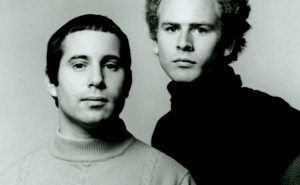
simon and garfunkelWe bring you another legendary folk song, the English ballad called Scarborough Fair. Quite unsurprisingly, the origins of this folk ballad are also unknown. What is known however is that the songs was spread around by bards of Medieval England who took them from town to town and with each passing hand the lyrics and arrangement kept changing, which explains the numerous versions of the song today. The name Scarborough Fair, refers to a 45-day trading fair which used to happen in the seaside town of England called Scarborough. The song speaks of a man assigning his lover a set of impossible tasks, completing which would apparently qualify her to be a true love of his.
In 1963 Bob Dylan borrowed part of the famed English folk singer-guitarist Martin Carthy‘s arrangement of Scarborough Fair for his song Girl from the North Country which made appearance in his album The Freewheelin’ Bob Dylan and subsequently in other Dylan albums too. But this version is typical Dylan and doesn’t sound a lot like how many of know the song. The most famous and the most memorable version of Scarborough Fair to date remains the one by the American duo Simon and Garfunkel for their 1966 album Parsley, Sage, Rosemary and Thyme. The pair again adapted their version from Carthy’s arrangement, but didn’t credit Carthy in the album which led to a long-standing standoff between Carthy and the duo. In my opinion the beauty of the song lay in the contrapuntal arrangement of the vocals. A lot of artists have hence covered the song, including Al Di Meola, Justin Hayward, Sarah Brightman etc, but nothing has quite matched up to the charm of the Simon and Garfunkel version.
Another reason for including this song in our series was this adaptation of the song that I had once found in a Malayalam song of the 1980s. The song in contention is Deva Dhundhubhi from the 1986 movie called Ennennum Kannettante, composed by this once exceptional composer Jerry Amaldev who has given a lot of memorable songs to Malayalam filmdom. What makes this adaptation noteworthy is the way it has been made to fit into a totally Carnatic-oriented song. To clear any air of plagiarism, the tune of the song is totally original and it is just in the second interlude (to be precise 2:32 – 2:56) that Jerry Amaldev includes this Veena adaptation of the first stanza of Scarborough Fair. Below are the links to a few versions of Scarborough Fair, plus the Malayalam song. Shall be back with another song soon!

A.Song.A.Day – Asturias

Posted by VIP On September - 11 - 2009

albenizAfter a long break we return with the next song of this series. And this time it is a musical piece that you will invariably encounter if you are an aspiring classical guitarist. The piece is called Asturias (subtitled Leyenda) and was composed by the prodigious Spanish composer Isaac Albeniz some time in the early 1890s. The piece is today the fifth movement of Albeniz’s Suite española, op. 47, though when composed it was the prelude piece of his then work titled Chants d’ Espagne, op. 232. It was German publisher Hofmeister who gave it the name Asturias. If you were to listen to the guitar version of the song (which incidentally you can by scrolling down) you would find it hard to believe that Asturias was actually written for piano. For that matter many of Albeniz’s compositions were transcribed from piano to guitar, most notable composer of such works being Francisco Tarrega, whose guitar transcriptions once Albeniz himself declared to be preferrable to him over his own piano originals. But the first successful guitar arrangement of Asturias was not done by Tarrega, instead by Andres Segovia, whose edition was subsequently taken as the primary source by most guitarists for their performances.

Asturias has made numerous appearances in popular culture. The most notable one is of course Spanish Caravan by The Doors which features the main theme of the piece. The main theme has also been adapted by Iron Maiden in a quintessential Maiden-esque way in the song To Tame a Land (the part after 4:09). In fact, the charm of Asturias lies in that Spanish main theme portion which will have you hooked to the song once you start listening to it. And the effect is best captured on the guitar, as you would perceive in the videos below. Enjoy!

Asturias played by John Williams


Asturias performed by Ana Vidovic


Piano version by Pablo Galdo


Spanish Caravans by The Doors


To Tame a Land by Iron Maiden


Isabelle Morretti doing Asturias on the harp


The band Barrage doing a violin cover of Asturias


twitter / MusicAloud Facebook / MusicAloud Youtube / MusicAloud Youtube / MusicAloud
MusicAloud.com on Facebook